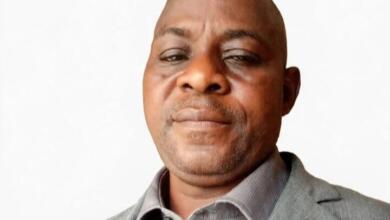
OSUN:@35: Years of the LIiving Spring
..._from Babangida’s decree to Adeleke’s Foundation, and the Long Walk to Progress

By Kazeem Tiamiyu
It was a Thursday evening in August 1991. Radios crackled across Yorubaland. Then came the voice of *General Ibrahim Badamosi Babangida*.
“Fellow Nigerians… Government has decided to create 9 additional states…”
In that moment, *Osun State* was born. Carved out of the old Oyo State, with Osogbo as capital.
In Ede, drums rolled into the night. In Ilesa, prayers went up. In Iwo, elders poured libation. A new home had been given to the people of the “State of the Living Spring.” But a name on the map was not enough. A state had to be built — by men and women who believed in it.

*The First Civilian Hand: Senator Isiaka Adetunji Adeleke*
Just six months later, in January 1992, Osun got its first taste of democracy. *Senator Isiaka Adetunji Adeleke* was sworn in as the *first Executive Governor of Osun State*.
“Serubawon” was barely 36. He came with fire. In 22 short months, he showed what was possible when government is close to the people. He established the Osun State Hospital in Osogbo, began road projects, and made sure civil servants had a place to work. Most importantly, he moved government out of the capital and into the towns.
He was a grassroots man. He knew Ede, he knew Iragbiji, he knew Ikirun. He attended funerals, weddings, and community meetings. For many, that was the first time they felt the state.
He would also be remembered for introducing free education across the state tertiary institutions
His tenure ended abruptly in November 1993 when the military returned. But the foundation he laid never died. Today, his name is still spoken with pride — as the man who showed Osun what civilian leadership could look like.
*The Holding Years and the Return of Democracy*
What followed were years of military administrators — *Col. Leo Ajiborisha, Col. Anthony Udofia, Capt. Onyearugbulem, Col. Anthony Obi, and Capt. Theophilus Bamigboye*. Their job was not to dream big, but to keep the lights on. They set up ministries, posted staff, and held the state together until 1999.
When democracy returned, Osun began to find its rhythm.
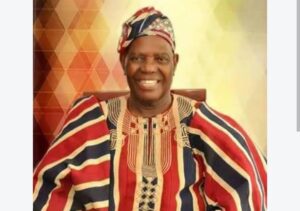
*Chief Bisi Akande* gave the state fiscal discipline and the “Omoluabi” identity.
Chief Bisi Akande would be remembered for construction of state secretariat which till now has not been fully occupied by government officials.
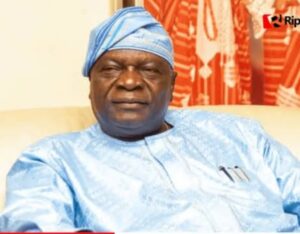
*Prince Olagunsoye Oyinlola* spread roads and schools across the 30 LGAs and established the state university with 6 campuses across the major towns in the state.told the world that Osun was peaceful.

Then came *Ogbeni Rauf Aregbesola*. For 8 years, Osun became a national experiment. Free food for pupils. “Opon Imo” tablets. New model schools. And the world finally noticed the *Osun-Osogbo Sacred Grove* when UNESCO declared it a World Heritage Site. It put Osun on the global tourism map.
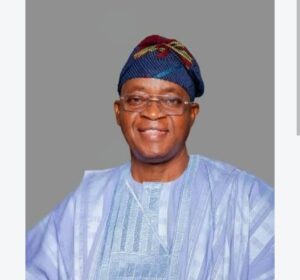
*Alhaji Gboyega Oyetola* focused on stability — health insurance for families, payment of salaries, and fixing roads that had been abandoned.
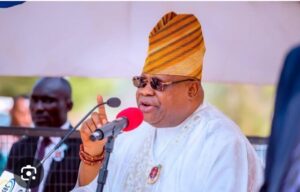
Today, *Senator Ademola Adeleke* leads with the “Imole” agenda. The focus is on workers’ welfare, fixing township roads, and unlocking Osun’s economy through farming, culture, and technology. The conversation has shifted from “can Osun survive?” to “how far can Osun go?”
*35 Years Later: How Far Has Osun Come?*
A state created by decree in 1991 is now a cultural capital.
The *Osun-Osogbo Festival* brings the world to our doorstep every August. Our universities, led by UNIOSUN, are producing doctors, engineers, and teachers. In agriculture, Osun is still one of Nigeria’s largest cocoa and cassava producers. The new push is to process what we grow here, so that wealth stays here.
The roads that once isolated towns are slowly linking them. From *Ede South to Oriade, from Iwo to Ifetedo*, the demand is the same: bring government closer. That is why the rise of grassroots leaders matters. Men and women who, like the first governor, walk from ward to ward, who answer their phones, who keep their doors open.
Osun’s story has not been perfect. There have been debts, delays, and disagreements. But there has also been progress. We have moved from drawing the map, to building institutions, to now asking bigger questions about jobs, innovation, and identity.
*The Spirit of the Living Spring*
35 years after Babangida’s announcement, and 33 years after Senator Adeleke first sat in the governor’s seat, Osun is no longer an infant.
We are the state of sacred groves and scholars.
We are the state of farmers and festival.
We are the state where, if you work hard and keep your character, people will say “Omoluabi ni.”
The decree gave us Osun. The first governor gave us hope. Every leader since has added a layer. The job now belongs to this generation — to take the Living Spring and make it flow into every home, every farm and every classroom.
Happy Anniversary, Osun State.
Ile Omoluabi. The journey continues.